Showing posts with label Books. Show all posts

Saturday, July 19, 2008

The Free Content License They Used 1800 Years Ago

In my Pahlavi (also called Middle Persian) classes we've started reading a new text called "The Book of Wars (or Works) of Ardeshir-e Bābakān" which belongs to some 1800 years ago. Here's my rough translation of its first paragraph:

In the name, power, and help of the Creator Ohrmazd, the Glorious, the Great, wishing health and long life for all good-doers especially those who have this (text) (re)written.

Imagine if we had something like that last phrase in the GNU FDL (or other licenses)!

A note about the text for the curious:
Although the book is very interesting from a historical or linguistic perspective, it's not the most honest kind of history. To the contrary, it is part of a grand struggle by the Sassanid Empire, not only to legitimize their government, but also to remove their predecessors the Ashkanians (the Parthians) from the face of history. Interestingly, the government they were trying to remove from history is, to this very date, the longest ruling government in the history of Iran, having ruled more than 460 years. You will be surprised to know that they succeeded in this quest to a very large extent. The Ashkanian Empire is hardly ever mentioned in later texts. This fact, along with the fact that Sassanids destroyed almost everything their predecessors had built, makes it very difficult for us to get to know about what was probably the coolest government we've had in our history: a federal (and to a large extent democrat) empire.

Update: I did a little bit more research and found out that my assumption that the book is written 1800 years ago may not be correct. Apparently, for all that we know, it is written some times during the reign of Sassanids, which make it any time between 1800 and 1400 years ago. Still I guess it is old enough!

Monday, March 19, 2007

Big Brother

When I finished reading George Orwell's Nineteen Eighty-Four, I was wondering who is the real Big Brother among all those I know. My first candidate was the Supreme Leader, but I reconsidered that because even "they" don't claim he is watching us. Who is the one then? The one that watches over? The one that we should fear and yet love?

Quickly I started remembering about him. I remembered I read in "the Book" that he is watchful over all things. I even remember I heard the world is his very presence, and that we should not "commit sins" in his presence.

They say someone will come, a reformer, who will rebuild our "corrupt" world and make it a place in which everyone loves him. Don't they say how he is going to do that? Of course, they do; he will kill those who don't love him.

And now I think I know the Big Brother, but unfortunately I hate him. Maybe they should take me to the room 101; although I doubt if even that can make me love Allah.

Thursday, March 01, 2007

High Rise

J.G. Ballard's "High Rise" probably can be classified in the genre usually known as New Wave Science-Fiction. I am a big fan of Sci-Fi (and Fantasy), although it is very hard to exactly tell what Sci-Fi is. There are totally different definitions for Sci-Fi. I prefer to use the term in a general sense to include the works of Stanislaw Lem, Arthur C. Clark and Issac Asimov, for example, although their works are totally different in both style and content, and despite the fact that Lem does not consider himself a Sci-Fi writer (and if you have read his works, you can easily notice how much different they are).

High Rise is even more different than the Sci-Fi works I have read so far but, Sci-Fi or not, I pretty much enjoyed Ballard's masterful style when reading High Rise, as the first book by him I read.

(Spoilers Coming)
High Rise is about the life of the 2000 people who live in an ultramodern forty-story building. The high rise offers all the services needed by its occupants (who are mostly highly educated professional people). Just by the time the tenants of the last apartment arrive life in the high rise starts to gradually change.

It starts quite innocently by things like a wine bottle smashing over Dr. Laing's balcony and later by short power failures. Soon violence spreads quickly across the building. The residents divide themselves into three classes: the lower class, the middle class, and the higher class. This classification matches both their social class and the floors they live in (the lower class are those who live in the first ten floors, the higher class live in the upper floors, and the middle class in between).

The high rise, initially designed to offer anything its tenants need, now becomes a completely isolated world in which the residents try abandoning all their relationships with the outside world and even convincing others that everything is going fine inside.

Life in the high rise changes quickly from the three-class environment into a hunter/gatherer culture; just like they have time-traveled thousands of years back in time, to the dawn of the human kind.
(No more spoilers)

I came across High Rise accidentally in the library, and I'm glad I found it. Now I'm planning to read more books from Ballard. If you're not sure which book you're going to read next, you may want to try High Rise.

I have also read a film adaptation is underway for 2008.

Wednesday, December 27, 2006

Man Is Not Made for Defeat

"But man is not made for defeat," he said. "A man can be destroyed, but not defeated."

A few days ago, I had some free time at the university. I decided to go to the central library and read something until the class starts. The literary part of the library is really a shame. There are very few literature books in comparison to others. Probably about a hundred or so. Anyhow, I was searching among them when I came up with this copy of Hemingway's The Old Man and the Sea. The poor book seems to have endured many painful years. I had not read any of Hemingway's books, so I started right there. It absorbed me.

I can definitely say it is one of the finest books I've read. It entered the list of my favorite books instantly.

The Old Man and the Sea, for those who have not read it, is a story of a man's struggle with the beasts of the sea; a story of a human being's unbelievable power. The old man is a mere old fisherman, yet he shows how much power a human being can have when he wants. Hemingway's strong and vital style absorbs the reader. It's one of those books you cannot easily put away before finishing it.

Thursday, November 23, 2006

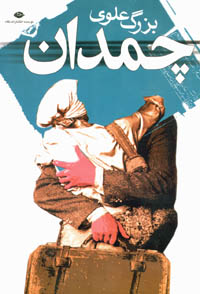
The Suitcase

I have started reading Chamedan ("The Suitcase") by Bozorg Alavi (Here's his official website, in Persian) . It is one of Alavi's early collections (first published on 1934).

We decided to read this book at a book club at university. I'll have a post about Chamedan and Alavi later.

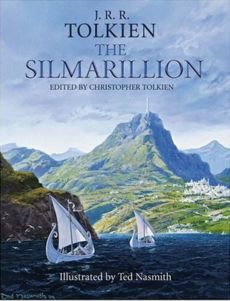
The Silmarillion

I finally finished reading The Silmarillion. Not that I am a slow reader (I started on October 11, and the book has 455 in Persian translation), I only had little time to spend on it. In fact, I read most of the book in the time I had between my classes at the university.

The Silmarillion is a complex work and not an easy book to read. The stories contain a lot of themes, names, and various information. The Wikipedia entry on "Of the Rings of Power and the third Age" (the final part of the book) says:

The work is a fictional historical essay dealing with the preamble to the events described in Tolkien's epic novel The Lord of the Rings, and the events themselves, in the style of The Silmarillion. The fact that those events are explored in a mere handful of pages suggests that if the events described in the rest of The Silmarillion had been written in the style of The Lord of the Rings they would have filled hundreds of volumes.

For a complete understanding of the book, it is necessary to read it more than once. That is what I do for most of the books I like. I usually find many interesting points when I re-read the books I had already read. In case of Silmarillion I have a new opportunity. I read the Persian translation and now, thanks to a dear friend, I have the original English text. I can read the stories again, and this time in the original language. The Persian translation was not completely flawless and it's major problem was reading the names. In Persian, normally short vowels are not written. Of course, it is usual to write the short vowels when a new word is introduced, or provide the original foreign word as footnote, but in this case I cannot really blame the publisher because the number of new words was very much and writing all of them with short vowels would probably make the text a little ugly. Anyhow, everything is going to be fine with the original text. I guess I will start it as soon as I get rid of the mid-term exams.

The first part of the book is Ainulindalë ("The music of the Ainur"). It is the story of the creation of the universe ("Eä") in Tolkien's Legendarium and its style is somehow like that of the Old Testament which I really enjoyed --I love archaic style. The story of the creation of the world out of music, especially, is very interesting. I had already tried to compose my own versions of the creation for the fun of writing fiction, and I was fascinated that part of Ainulindalë was similiar to one of my own accounts (in mine, the life was blown into the world from the song of the First Lady --Ovëliad).

The second part, Valaquenta, is less like a story but it's vital to the reading of the rest of the book, as it describes the Valar (those among the Ainur who became the powers of the world), the Maiar (the lesser Ainur who came to help the Valar), and the Enemies (those fallen among the Valar and the Maiar).

The third part of the book, Quenta Silmarillion ("The Account of the Silmarils"), is the bulk of the book and describes the beginning of the world before the elves and the men, the awakening of the elves and later the men and the dwarves, and mainly the story of the Silmarils, the three star-like jewels which were made by Fëanor (one of the high elves, those who went to Valinor upon the invitation of the Valar) along with many stories narrated meanwhile. Probably the most beautiful chapter in this part is the story of Beren and Lúthien. The story was also narrated by Aragorn as a very short poem in Lord of the Rings (FotR, A Knife in the Dark).

The fourth part is named Akallabêth ("The Downfallen"). This is my favorite part, although it is quite short. Akallabêth is the story of the fall of the kingdom of Númenor after the Dúnedain are deceived by Sauron and attempt to attack the Undying Lands and the Valar (and that is why they started calling him Sauron the Deceiver later). Only a group of them, still faithful to the Valar, survive (those lead by Elendil, that Aragorn in Lord of the Rings is his descendant) and Númenor itself is completely destructed by the will of Eru Ilúvatar ("the One, Father of All"). The theme partly resembles the story of destruction of Atlantis. Interestingly, the Quenya form of Akallabêth is Atalantë.

The final part of the book, Of the Rings of Power and the Third Age, tells the story of the making of the rings of power (and the most noticeable among them, The One Ring) and the events that lead to the events of Lord of the Rings, as well as a short narration of Lord of the Rings itself, in Silmarillion style. The book ends with the Eldar's leaving of the Middle-earth and the beginning of a new age for men.

Final words: I strongly recommend reading The Silmarillion for anyone who likes fantasy. Especially, if you have already read Lord of the Rings, reading The Silmarillion would increase the joy of the reading of both of the books.

Wednesday, October 11, 2006

Ainulindalë

I have started reading The Silmarillion (By J.R.R. Tolkien). I'll have a post about it, as soon as I finish the book. For now I can only say I'm really enjoying it. This is the kind of book that has plenty stuff for being read several times.

Note: If you're curious about the title, Ainulindalë is the title of the first chapter of the book which means "The Music of the Ainur".