Showing posts with label Stories. Show all posts

Monday, February 05, 2007

A Journey to the White Spaces

"He looked at maps, and wondered what lay beyond their edges: maps made in the Shire showed mostly white spaces beyond its borders." --The Fellowship of the Ring

There are things about the old world one may miss. For me, it is living in a mysterious world; one in which you can imagine anything you like about what lies a few miles away. A world in which "the road" is the start of a journey you do not know about its end.

"It's a dangerous business, Frodo, going out of your door. You step into the Road, and if you don't keep your feet, there is no knowing where you might be swept off to. Do you realize that this is the very path that goes through Mirkwood, and that if you let it, it might take you to the Lonely Mountain or even worse places?"

I get disappointed when I think about what we call "a road" today. You can drive as much as you like and you will keep seeing signs saying, "Qom 40", "Esfahan 175", "Ahvaz 680", and things like that.

When I think more about it, our maps do show white spaces beyond our planet; Well, yes, they are usually painted black and there are small white points on them our physicists can tell you exactly what atoms they are made of. What the physicists cannot tell you, is how it looks like to live there (and even their information about what they are made of [or even if they exist or not] is a little bit out-dated; they cannot tell you anything about our neighbor galaxy, Andromeda, newer than 2.5 million years ago). So we do have white spaces; quite exciting. The disappointing fact is that we cannot take a backpack and start a trip to see the mountains ("Mountains Gandalf, mountains!"). I believe a time will come, sooner or later, that people will be able to do that. I don't have much hope that I will be alive by that time. Seems we are in the wrong time.

Maybe years later, a grand grandchild of me will take a backpack and start a journey towards the white spaces to see the lonely mountain. Maybe, on the road, he/she will be singing:

The Road goes ever on and on
Down from the door where it began.
Now far ahead the Road has gone,
And I must follow, if I can,
Pursuing it with eager feet,
Until it joins some larger way
Where many paths and errands meet.
And whither then? I cannot say

Wednesday, December 27, 2006

From the Master of Words

One once informed Anushirvan the Just, "the Mighty Lord has eliminated that enemy of yours." He answered, "are you certain that He has let me be?"

Sa'adi, Golestan ("The Rose Garden")


Sa'adi has always been admired for his flawless mastery of words. This is one of the shortest stories from his Golestan. Although short, I believe it is very beautiful and it proves the Master of Words was even able to form a powerful story with only a handful of words --especially the original Persian story, not this quick translation of mine.

Thursday, November 23, 2006

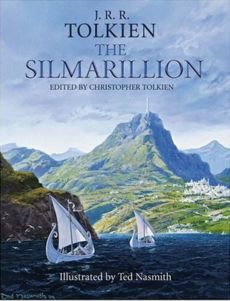
The Silmarillion

I finally finished reading The Silmarillion. Not that I am a slow reader (I started on October 11, and the book has 455 in Persian translation), I only had little time to spend on it. In fact, I read most of the book in the time I had between my classes at the university.

The Silmarillion is a complex work and not an easy book to read. The stories contain a lot of themes, names, and various information. The Wikipedia entry on "Of the Rings of Power and the third Age" (the final part of the book) says:

The work is a fictional historical essay dealing with the preamble to the events described in Tolkien's epic novel The Lord of the Rings, and the events themselves, in the style of The Silmarillion. The fact that those events are explored in a mere handful of pages suggests that if the events described in the rest of The Silmarillion had been written in the style of The Lord of the Rings they would have filled hundreds of volumes.

For a complete understanding of the book, it is necessary to read it more than once. That is what I do for most of the books I like. I usually find many interesting points when I re-read the books I had already read. In case of Silmarillion I have a new opportunity. I read the Persian translation and now, thanks to a dear friend, I have the original English text. I can read the stories again, and this time in the original language. The Persian translation was not completely flawless and it's major problem was reading the names. In Persian, normally short vowels are not written. Of course, it is usual to write the short vowels when a new word is introduced, or provide the original foreign word as footnote, but in this case I cannot really blame the publisher because the number of new words was very much and writing all of them with short vowels would probably make the text a little ugly. Anyhow, everything is going to be fine with the original text. I guess I will start it as soon as I get rid of the mid-term exams.

The first part of the book is Ainulindalë ("The music of the Ainur"). It is the story of the creation of the universe ("Eä") in Tolkien's Legendarium and its style is somehow like that of the Old Testament which I really enjoyed --I love archaic style. The story of the creation of the world out of music, especially, is very interesting. I had already tried to compose my own versions of the creation for the fun of writing fiction, and I was fascinated that part of Ainulindalë was similiar to one of my own accounts (in mine, the life was blown into the world from the song of the First Lady --Ovëliad).

The second part, Valaquenta, is less like a story but it's vital to the reading of the rest of the book, as it describes the Valar (those among the Ainur who became the powers of the world), the Maiar (the lesser Ainur who came to help the Valar), and the Enemies (those fallen among the Valar and the Maiar).

The third part of the book, Quenta Silmarillion ("The Account of the Silmarils"), is the bulk of the book and describes the beginning of the world before the elves and the men, the awakening of the elves and later the men and the dwarves, and mainly the story of the Silmarils, the three star-like jewels which were made by Fëanor (one of the high elves, those who went to Valinor upon the invitation of the Valar) along with many stories narrated meanwhile. Probably the most beautiful chapter in this part is the story of Beren and Lúthien. The story was also narrated by Aragorn as a very short poem in Lord of the Rings (FotR, A Knife in the Dark).

The fourth part is named Akallabêth ("The Downfallen"). This is my favorite part, although it is quite short. Akallabêth is the story of the fall of the kingdom of Númenor after the Dúnedain are deceived by Sauron and attempt to attack the Undying Lands and the Valar (and that is why they started calling him Sauron the Deceiver later). Only a group of them, still faithful to the Valar, survive (those lead by Elendil, that Aragorn in Lord of the Rings is his descendant) and Númenor itself is completely destructed by the will of Eru Ilúvatar ("the One, Father of All"). The theme partly resembles the story of destruction of Atlantis. Interestingly, the Quenya form of Akallabêth is Atalantë.

The final part of the book, Of the Rings of Power and the Third Age, tells the story of the making of the rings of power (and the most noticeable among them, The One Ring) and the events that lead to the events of Lord of the Rings, as well as a short narration of Lord of the Rings itself, in Silmarillion style. The book ends with the Eldar's leaving of the Middle-earth and the beginning of a new age for men.

Final words: I strongly recommend reading The Silmarillion for anyone who likes fantasy. Especially, if you have already read Lord of the Rings, reading The Silmarillion would increase the joy of the reading of both of the books.

Wednesday, November 15, 2006

The Azhi, the Blacksmith, and the King

We read the story of Kaveh the blacksmith, Zahhak the Azhi, and Jamshid and Fereydun, the two most praised kings of the ancient world (in Iranian mythology).

In Iranian mythology, Jam is the greatest king ever. He is both a king and a priest of Ahura Mazda. He teaches people how to use metals and many other materials, he teaches them how to build houses, he teaches them how to make perfumes and wine, how to mine jewelry, how to sail in the seas and much more. He orders the society and divides people into four classes: the priests, the warriors, the farmers, and the artisans. All the creatures in the world come under his rule. One day, when he is sitting on his throne the divs who serve him raise his throne and as he flies into the sky all his people see him shining brightly and after that he is called Jamshid (shid means "light" in Persian). That day, which was the first day of Spring, was then called Norooz ("new day") and it became the most important celebration of the people. Iranians, and some other nations of the Greater Iran, still celebrate Norooz as their most important celebration --the celebration of the beginning of the new year.

Jamshid had a cup (called Jām-e Jam, "Jam's Cup"), filled with the elixir of immortality, in which he could see everything in the universe. Jamshid's Cup is an important symbol in Persian literature.

Jamshid ruled the world for over three centuries, and during that time there was neither disease nor death in the world, but he was finally corrupted by his pride and hence the Farr (the imperial glory Ahura Mazda gives someone to rule the people) departed from him and so Jamshid fell to Zahhak and was later cut in two and killed by him.

The description of Zahhak (originally Aži Dahāka) slightly differs in the different sources we have, i.e. Avesta and post-Avestan older texts, and Shahnameh. In Avesta, Aži Dahāka is the greatest of the Ažis (dragons) "with three mouths, six eyes, and three heads" (presumably meaning three heads with one mouth and two eyes each). He is demonic although his other characteristics match those of a human being. Shahnameh, and many post-Avestan texts, identify him as an Arab (or at least of Semitic origin) who becomes under influence of Ahriman. He gains kingly rule after the fall of Jamshid, and although he leads the world a thousand years of misery, his reign was ultimately good since had he not become the king, the rule would have been taken by the immortal demon Xešm, and so evil would have ruled upon earth until the end of the world.

Zahhak was finally defeated by Fereydūn, a descendant of Jamshid, who took him into the mountains of Alborz and chained him up on top of Damavand where he will live until the end of the world. It is said that at the end of the world, Zahak manages to free himself and starts to destroy the world but before he can do that, Garshasp the ancient hero who killed the other dragons will wake up from death, slay him as the last living dragon and save the two thirds of the world that Zahhak has not devoured.

But Shahnameh also speaks of another figure: Kaveh. Kaveh is a unique character in Iranian mythology because he is an ordinary person, unlike most other heroes. He is brave enough to stand before the most feared Azhi and complain from him, brave enough not to sign a testimony even the highest ranking officials do not dare not to sign, brave enough to call the name of the Azhi's enemy in the public. So much brave that Zahhak himself admits (as Ferdowsi says in Shahnameh) "when Kaveh came in, as I heard his voice, it seemed to me that a wall of iron rose between us." Probably Kaveh is a symbol of the people who helped Fereydun, for although it was Fereydun who chained Zahhak up in Alborz, his army of people who accompanied him to the capital made Zahhak fear so much that he fled. If Fereydun was the key to freedom, then Kaveh (and the people he symbolizes) turned that key in the door.

The rise of Kaveh was like a spark in the darkness; a spark that set fire to a crowd. His flag, the leather apron he put on the spear, became a symbol of Fereydun and the Iranian Empire until the fall of the Sassanid dynasty during the Arab invasion when Arabs torn it into pieces (in fact, the history doubts that the real imperial flag was Kaveh's flag, and probably it was another one whose name was similar to Kaveh's, but it's no different for in fiction and mythology we are considering the world in another stage of imagination, as J.R.R. Tolkien puts it in one of his interviews).

The last word is that the above picture shows the statue of Kaveh in Esfahan. For years the Islamists have fought building statues since Islam is against building statues or paintig pictures of people. It seems that they have lost the war, although it took many statues destroyed to achieve that, for now there are many beautiful statues in Esfahan (as well as in other cities).

Sunday, November 12, 2006

The Blacksmith (Final Episode)

When Kaveh comes out of the assembly, he goes streight towards the crowd. He takes a spear and puts his leather apron on it. Then he cries out:

"O People! This is a devil you are living under his rule. Who among you is going to disobey the evil? Who among you is going to call for Fereydun?"

And it comes a large crowd of people following that simple leather flag while Kaveh guides the people to the Alborz mountains where, he knows, Fereydun lives.

Fereydun from top of the mountain sees the crowd of people coming, and he perceives, "Its time had now come."

So Fereydun brings the old crown passed to him and puts it on, for it's time that someone from the royal line wear the crown of the world. And then he asks for his mother's permission to go, the one he owes his life to, more than any son owes his life to his mother. Farank, with tears upon her face, calls for Mazda's help for his son and lets him go.

Then Fereydun asks his older brothers to have a mace made for him, and they summon the greatest of the blacksmiths to make the mace. The blacksmiths make a grand mace for him with a head like that of an ox and, with his mace in hands, Fereydun leaves with his army of people for Zahhak's capital.

On their way, they reach the Arvand river. Fereydun asks the river keeper to let them pass the great river with the boats, but he refuses. "I have the word of the king of the world," he says, "that no one shall pass this river without an explicit permission.

Fereydun gets angry and, without the fear of the great river, guides his horse through the water and then everyone follows him.

So they make their way through Arvand and travel all the long way until they reach the capital where they find Zahhak has fled and left the capital.

So Fereydun enters the palace with little resistance and then he sets all the prisoners free of the jail and of Zahhak's magic and among those who were set free were Arnavaz and Shahrnavaz, the two daughtars of Jamshid and the most beautiful women of the world.

But there is Zahhak's treasurer there who, although pretends to submit, is still a slave to Zahhak and when he gets the time he goes near his master and tells him all he has seen.

When Zahhak hears of Fereydun, sitting on the throne with the daughters of Jamshid besides him, he loses his temper and rushes towards the palace.

Fereydun is looking for him when Zahhak himself comes to the palace and with a sword in his hand is going to kill Arnavaz and Shahrnavaz, but before he can manage to kill the two, Fereydun strikes him with his ox-headed mace on the shoulders, and on the heart, and on the skull, and from the Zahhak's wounds there come many vermin.

Fereydun is going to kill Zahhak that he hears the voice of Sorush, the messenger angel.

"His reign has come to an end, but not his time. Take him to Alborz."

So Fereydun takes Zahhak to Damavand and there again he hears Sorush saying,

"Have him chained up on the top of Damavand, and let him be there imprisoned until it comes the end of the world, when he will meet his end along with the others. The world will see no other harm from him before that time."

So it ends, the rule of Zahhak, and it comes the era of Fereydun. The era of delight and happiness, and Fereydun ornaments the simple flag of Kaveh with many jewels and it remains a symbol of the royal line, and of his land for a long long time.

And of Zahhak no one hears anymore, before the end of the world, except some of those who wander among the Alborz mountains --they can hear his fell voice groaning in pain and waiting for the time the hands of fate will set him free to face his final destiny.

Friday, November 03, 2006

The Blacksmith (Episode II)

It is the era of Jamshid, the one who had the sheed (the light) upon him and the one who hold the Farr (the imperial glory) for such a long time. There was never an era like his, nor there is going to be an era like that before the Later Day (at the end of the world). But the era of the one with the light is ending.

It is before an audience of great leaders of the world that Jamshid's fall begins. "Tell me who brought the world new order," He tells them, "who brought you good eating and peaceful sleeping and comfortable living? Who drove away the demons from your lands? Who taught you the arts and the ways of ordering your communities? The crown and the throne of the world are mine, tell me who else deserves the kingship of the world?"

And this way, the Farr departs from him. The end of the golden era of the world is coming. One can see darkness in the western horizon. Jamshid's cup shows a clouded world, but he does not bother taking a look at it.

* * *

In the west, in Arabia, Zahhak had been seduced by Ahriman and had killed his father and become the ruler of Arabs. It is for the second time that Ahriman (the evil spirit) comes to him, disguised as a good looking man, and introduces himself as a skilled cook and offers to cook Zahhak extraordinary foods. He cooks many fabulous meals and when Zahhak lets him ask something from him, he simply asks to kiss the king's shoulders. Zahhak is fool enough to let him do that and as soon as Ahriman touches Zahhak's shoulders he disappears and two serpents rise upon Zahhak's shoulders. Zahhak, frightened to death, cuts the two serpents but they grow again. Then he calls upon all the physicians of his land to cure him, but to no avail. Then for the third time Ahriman comes to him, this time disguised as a skilled physician, and tells him the only way he has is to feed the serpents with man's brain to keep them calm and maybe someday they will wither away. And Zahhak starts doing that, completing his journey towards becoming an Azhi (dragon).

* * *

When the Farr leaves Jamshid, his commanders rise up against his authority. Rebellion spreads throughout the land and when Zahhak the Azhi comes to overthrow him, he simply flees. The world has fallen.

This way, Zahhak becomes the ruler of the world. Those who did not stand against him when he rose against Jamshid realized soon that they have exchanged the bad for the worse. Little they know that they have also been saved from the worst. Anyhow, each day two men are killed to feed his serpents. Sorcery spreads the world. The ways of righteous, all those who Jamshid brought, are almost forgotten. Until one night Zahhak has a horrible dream. He wakes up scared and finds Arnavaz (Jamshid's daughter who Zahhak brought her to himself and cast a spell on her along with her sister, Shahrnavaz) besides him Arnavaz asks him, "what is it my lord? Tell me what have you seen in the dream?" Zahhak tells her, "I saw three warriors coming to me, and the youngest of them beat me with his mace and dragged me towards a tall mountain." Then he summons the wise men and the dream-readers to explain him the dream. But the men are afraid to tell anything, until Zahhak becomes angry and finally one of them tells him that his reign is coming to an end and a man, still not born from mother, is going to overthrow him. They even tell the man's name: Fereydun.

Zahhak searches all the world for Fereydun, and meanwhile Abtin, Fereydun's father, is killed to feed Zahhak's serpents, and then later Barmayeh, a great cow whose milk feeds young Fereydun is also killed by Zahhak's men, while Fereydun's mother takes him to Alborz mountains to keep him from Zahhak's spies.

Years pass as all efforts to find Fereydun are in vain and Zahhak, who is still much frightened by the prophecy, summons an assembly of the kingdom's leading men to have them all testify his righteousness.

Friday, October 27, 2006

The Blacksmith (Episode I)

There is a large crowd of people gathered around the palace. Inside, all leading men of the kingdom are around the large hall. At the end of the hall the sorcerer king is sitting on his throne. The two serpents who had grown long ago on his shoulders are still slowly moving around his head. The hall is now in a fearful silence as he starts to speak. "You are all aware of my deeds, men of my kingdom," he says, "and you're aware that I have done nothing but good, for you, and for our people, and for our land." The hall is still in silence.

"So you are now signing this document, testifying this. That I have always been in the righteous path, that no harm has ever come from me to any man, that the world has always been in peace under my reign."

Now, the men in the hall are doing nothing but silently signing the document, without the slightest defiance. It was then that a voice of tumult is heard from the hallway, and suddenly a man, wearing a blacksmith's apron, enters the hall shouting.

"O' King! I am Kaveh, the complainant," he calls out, "I have come to complain from you, for I have had eighteen sons seventeen of which have been killed by your men and whose brains have been eaten by your shoulder serpents, and now the last one of them is in your prison to be killed the same way soon. If you are the king of the world, and you are the snake-shouldered, why should we people suffer?"

Zahhak, the snake-shouldered king, shocked by the man's move, can only call for freeing the blacksmith's son. Then, angry in his heart but unable to do anything, he hands the document to Kaveh and asks him to sign it. "Now sign this, as you have seen my justice," he says.

Kaveh reads the documents and gets angry. "You have all become the agents of evil, having signed this document of lies for the fear of the demon," he says to the men in the hall, then he tears the document apart and leaves the hall along with his son.

Thursday, October 12, 2006

Arash, Another Lookَ

My previous post was about Arash the Archer. It was a short retelling of the story in English by myself and I hope I have done it well, since it is one of my favorite stories. I believe, of course, the best narrative is by Siavash Kasrayi who told the old story in verse so beautifully. I think, there is an English translation of Kasrayi's narrative, although I have not read it.

The story, as you may have read from my previous post, tells the story of a man who puts his life on an arrow and throws it so far that it frees the entire land of Iran from the occupation of the barbarian Turanians and, believe it or not, every time I read the story it brings tears to my eyes. I'm not sure why. Probably because of the beauty of the story, or probably because of the great devotion of Arash, or probably both and much more. If you like the story, here's some more information about it.

The battles between the uncivilized people, called Turanians, who lived east of Iran in Central Asia shapes a large part of the Iranian legends and mythology, especially those narrated by Ferdowsi in his grand epic Shahnameh. Ferdowsi has referred to Arash in his book several times but has not mentioned the story. The story is attested in Avesta that shows how old it is (at least 1000 B.C.). In modern time, the story came into popularity again after Siavash Kasrayi published his narrative of it in verse.

Let's take another look at the legend.

The story starts in a time that Turanians have moved forward far into the Iranian territories and have reached near Mount Damavand. Damavand is usually considered the heart of Iran, and Iran at that time was a very larger country that its north eastern border was the Oxus river in Central Asia. Turanians, eager to smash the hearts of the peoples of Iran, suggest that the border between the two countries should be set upon the place an arrow, thrown by an Iranian archer, lands. No one in Iran is willing to accept the arrow until it comes to Arash, an ordinary man from an ordinary family. He goes upon the mountain and, knowing that no mere arrow can fly that much to cover all Iran-Zamin, puts his life on the arrow and throws it. The arrow flies by the power of his spirit and goes as far as the far bank of the Oxus and sets the eastern border of the empire for many centuries, while Arash's body is turned into many pieces and spread all over the land.

It is said that the spirit of Arash still dwells in Mount Damavand and helps the lost people find their way.

The One with the Arrow

It is a dark time; the time of ruin, the time of corruption, the time of the decline of the civilized and the advance of the barbarian, the time of the going of the light and the coming of the dark. Wherever you look, you see suffering, you see sorrow, you see despair.

In the battlefield there is only the huge pile of the dead and a few men standing at the side of Iran with their lord before the huge army of the barbarians, the last of the guardians of the Shah, in the eyes of all of which it can be seen the exhaustion of the battle. It is only now that Afrasiab, the lord of Turanians, has accepted the peace with only one condition. There is an arrow in his hands and a snicker on his mouth while he shouts "Our border shall be the place this arrow lands", and Manuchehr the Shah says, "yes, to the place the arrow flies, it is Iran". But Afrasiab laughs at him in his heart, "You fool! But who is going to throw it?! No man has remained of your archers".

And the arrow is passed by, going from one hand to another, throughout the land and no one dares to accept it, until it comes to Arash.

And it is Arash that, holding the arrow firmly in his hand, is going north to the heart of the land. To Damavand.

A cold wind is blowing. Arash looks upon the mountain as he goes north and although he is walking strongly, a trembling passes his body. "No", he says, "it's not me. It's the wind". And he takes his next steps.

"Wait", a voice calls, "Wait". There's a man running behind him. "That will go to nowhere, Arash. Go back. Go back and throw the arrow towards Afrasiab himself", the man says.

"No", answers Arash, "I will not do that because then another Afrasiab is going to rise and replace him. I'm going to end this once and for all. I'm going to free all with my arrow". And he continues his way as he goes towards the mountain.

And now, Arash is standing on the peak of Damavand, and he looks upon his land, and upon his people, and upon his Shah, and upon his bow and his arrow. And then Arash strains his bow as never before and as soon as he lets the arrow fly, his bow hits the ground.

Tomorrow, when people go searching for Arash, they return only carrying his bow, never finding a sign of his body.

And it was at the noon of that day that people could find an arrow upon the body of an old walnut tree on the far bank of the Oxus river; the glorious sign of a victorious nation.

And it was the only arrow, whose flying made the sun smile, and its falling made the earth happy. It was the flying of the spirit of the one with the arrow.