Sunday, December 31, 2006

Happy New Year, the Spammer Way!

I got this today, in a semi-spam email message from a Free Hosting provider company. Actually I had signed up there once for checking their features, but I never asked for an email, even a Happy New Year one. Anyhow, here it is:

Let all your old be fade away,
let your New comings cast this Day.
May your past be lost in abyss
and your future will be filled with a bliss.

Even though we might've learned much,
with wisdom that 2006 offered bunch;
but that would mean we lost our yearn
for we still have much to learn.

So I pray for your endless flame to know more each day,
and let your continuing quest may bring every New Day.

Happy New Year Everyone!

The Reminder

One of the main themes I wanted for my blog was stories and mythology. I don't know if the readers of my blog liked them or not, but I personally enjoyed writing those posts about Arash and Kaveh. Unfortunately, I have had little time for working on stories lately. I like to read more about each story I want to retell, compare sources and compile the best narrative I can. I have a few candidates, one of which is retelling the story of Siavash, one of my favorites in Shahnameh, but I need some time to think about the retelling and style, and to write several drafts and to throw them away. I'm not a professional, but as I said I like to do the best I can.

This is more of a reminder for myself, than an announcement, of course. I wish the exams started and finished sooner. When something unpleasant is going to happen, well, the sooner, the better!

Saturday, December 30, 2006

The Wise Move

It's more than a month I haven't booted into Windows. Today, I had to go to Windows to check something work in Windows, because I want to give it to a university instructor and it has to work correctly in Windows. Guess what happened? Just when Windows XP started up, after a long time of hard disk activity, it proposed me to restart the computer because it had detected a new hardware! And I assure you there is no new hardware. Of course, I clicked 'No'.

I had a short work of a few minutes, and it was enough to show me how slow Windows is. It was like a headache. I'm wondering how I used to do my everyday work in Windows. I'm now more confident about my move, and I'm so happy it finished!

Wednesday, December 27, 2006

From the Master of Words

One once informed Anushirvan the Just, "the Mighty Lord has eliminated that enemy of yours." He answered, "are you certain that He has let me be?"

Sa'adi, Golestan ("The Rose Garden")


Sa'adi has always been admired for his flawless mastery of words. This is one of the shortest stories from his Golestan. Although short, I believe it is very beautiful and it proves the Master of Words was even able to form a powerful story with only a handful of words --especially the original Persian story, not this quick translation of mine.

Man Is Not Made for Defeat

"But man is not made for defeat," he said. "A man can be destroyed, but not defeated."

A few days ago, I had some free time at the university. I decided to go to the central library and read something until the class starts. The literary part of the library is really a shame. There are very few literature books in comparison to others. Probably about a hundred or so. Anyhow, I was searching among them when I came up with this copy of Hemingway's The Old Man and the Sea. The poor book seems to have endured many painful years. I had not read any of Hemingway's books, so I started right there. It absorbed me.

I can definitely say it is one of the finest books I've read. It entered the list of my favorite books instantly.

The Old Man and the Sea, for those who have not read it, is a story of a man's struggle with the beasts of the sea; a story of a human being's unbelievable power. The old man is a mere old fisherman, yet he shows how much power a human being can have when he wants. Hemingway's strong and vital style absorbs the reader. It's one of those books you cannot easily put away before finishing it.

Tuesday, December 26, 2006

Cultural Engineering

I was going to my engineering mathematics class in the Islamic Knowledge department (some math classes are taking place there due to a space shortage in the math department) where I saw a poster with the title "The Cultural Engineering National Conference". This is a new plan from an ever fearful government that's doing its best to survive. So what the heck is cultural engineering? I thought it should be another invention of him ("him," in the same sense it was used in The Lord of the Rings) just like the software movement project he announced some time ago and had nothing to do with real software (yes, he's so supreme that he can order the words change their meanings as he likes!). So I started to do a search on Google, and guess what? I was right! I got some results, though. Let's check one out. This is what Cultural Engineering L.L.C. says, and it's interesting enough to quote from their definition page:

"Cultural engineering is a conceptual approach to cultural development planning and management that takes into account the changing concepts of culture and the design of practical strategies for dealing with issues and problems raised by culture and development in diverse contexts.... In other words, cultural engineering is about systems, processes, alternatives and the formulation of creative solutions to challenges in the development of cultural institutions and the promotion of people’s participation in cultural life."

It seems, as I already suspected, cultural engineering is not a well-established world-wide concept and the results I got were mostly part inventions used by some author to express an idea, like the one I quoted, which is mostly a corporate definition and interestingly involves "the promotion of people's participation in cultural life," as the last sentence puts it, and not someone else trying to smooth the cultural status of a nation to match his own interest. Yes, they want to engineer a nation in quite the same way someone tries to change the internals of a machine to have it work better for their needs. The only difference is that in the former a seventy-million nation should suffer and not a poor machine, but who cares?

Now that I'm writing about a himself-invented phrase, I think it's a good place to write about the other one I mentioned earlier: a software movement! I'd better quote a definition first. This is my translation of part of an essay from aviny.com. The essay titled "The Principals of the Software Movement" is written by Mohammad Ghalibaf, the current Tehran mayor.

Every civilization is built out of hardware and software. Hardware is the social structure and its products.... software is the conceptual system that backs the hardware, and like the hardware has many types: the principal concepts like philosophy of logic and logic [itself], the technical concepts like different mathematical, physical and social sciences, and also the social and general concepts with their own technical definitions, all of which are among the software.

I hate it when non-technicals use a phrase they don't understand at all for something else. Anyhow, software movement, along with cultural engineering, is part of a larger project they are working on: to control all the aspects of the Iranian society and then use it as a tool for their aims. The aims I'm talking about is, of course, far from a local Islamic system for Iran. They are (or want to be) "global gladiators", as Alvin Toffler calls them in his book, Powershift. Remember that their religion is all about world conquer.

Freedom Is Good

No, this is not a political post. It has more with the hacker spirit than with them (Don't misunderstand the real hacker for the stereotypical Hollywood types you see in movies or read about in newspapers; They're crackers. See Eric Raymond's famous How to Become a Hacker for more information on "Freedom Is Good" and the hacker attitude itself). I've just left the company I was working for in the last two months and I'm enjoying my freedom.

Now I understand the stress of working for someone else: someone stupid chooses a stupid project for you to work on, and you should maintain a long long list of stupid standards and then present your program for even a more stupid person (the exact "pointy-haired boss" type Paul Graham describes; See Revenge of the Nerds for more info). All of these happens in a stupid environment where they call it a company. And I was the smartest of the programmers (they said) and was assigned those projects that needed a smarter guy!

Now I'm again on my own. I choose my own project (how about an online game, or something fun like that), I can choose my own programming language (My favorites are Lisp, and Python after it), I maintain my own coding standards (isn't it just stupid to call the loop index "intCounter"?) and the working place is "home, sweet home", with the favorite Ubuntu box always at hand.

One can understand heaven only after experiencing the hell!

Monday, December 25, 2006

Happy Holidays

I was forgetting this most important post:

Happy Holidays Everyone!


[It's a little bit early to say happy new year!]

Plus Five

Today, five new members took part in this week's IREJO meeting. This is very good news for IREJO. We mostly discussed the new website today. We also formed a five member team for organizing the excursions; I am in this team. Forming a music group was discussed, too.

I think IREJO should expect a new brilliant era.

Thursday, December 21, 2006

A Long Long Night

It seems the sun is in a hurry as it moves faster than any other day and as it sets down the horizon, its last rays disappear sooner than ever, and then it starts: Yalda.

It is as long as it seems it is not going to an end, and it is as dark as neither the moon nor the stars can beat its darkness, and it is cold, colder than ever. Ahriman is in full power.

But not all hope had vanished. There is Azar, the burning and unburning fire, the visible and invisible fire, the eternal flame of Mazda. The night is going to be defeated, since Mithra is the protector of the morning light.

No matter how long it will take, Ahriman will be defeated, as it was defeated long long ago on the same day, when the sun was born. Now come and celebrate. As long as you are with Mazda's fire, Ahriman can never harm you. Come and celebrate the birth of Mithra, the ever protector of the light of early morning.

* * *

Today is the last day of Azar, the ninth month in the Iranian calendar and it marks the time of the Winter Solstice and the old celebration of Yalda, the longest night of the year, also known as "Shab-e-Chelle", and it is believed to have been celebrated for some 6000 years. Yalda, which literally means "birth", was the night on which the God of love, friendship, and light, the God of Sun, Mithra (a.k.a. Mehr) was born. Since Mithra was believed to be the guardian of the early morning light, there were many feasts in his honor on this night.

Yalda has lost its religious impact today and is mostly considered a social gathering. Nonetheless it is the most widely celebrated among the ancient Iranian festivals only after Norooz (and probably "Charshanbe Suri"). Since, most of those old festivals are getting forgotten (thanks to the deliberate negligence of the current rulers of Iran), I believe it is most important for us to celebrate those that are still respected.

Watermelons are considered one of the most important parts of the Yalda festival. Googling about watermelons, I found the interesting website of National Watermelon Promotion Board which aims at the promotion of watermelon demand in the U.S. and Canada. It has many interesting parts (including a recipe database) for watermelon lovers. If you are a watermelon fan, check it out.

And, by the way, happy Yalda!

Monday, December 18, 2006

They're All Women!

Today, in this week's IREJO weekly session, the IREJO board of directors was elected. Elham, Farmehr and Sayeh were chosen as the board ("estraro") members, in order, as the president ("prezidantino"), general secretary ("gxenerala sekretariino") and financial director ("kasistino"). This is the first full female board during the history of IREJO. I congratulate them all.

We also briefly discussed the IREJO web site (irejo.org is now registered for IREJO), the pre-Norooz meeting ("La Antaux Noruza Renkontigxo", Norooz is the Iranian new year festival), as well as the upcoming translation and conversation meetings.

Friday, December 15, 2006

La Zamenhofa Tago

Today, December 15, was the Zamenhof Day ("La Zemenhofa Tago", or the Esperanto [literature] Day). Like many Esperantists around the world, we celebrated this day in a special gathering with (mostly) other members of IREA (Esperanto Association of Iran).

The celebration was a quite small gathering that took place in the house of one of the members. In this get-together, first of all we listened to Mr. Mamduhi's speech (in Esperanto) on the development of Esperanto and its help towards communications and tourism, as well as the language problem on the Internet. Mr. Mamduhi, who is the current president of IREA, provided some useful diagrams during his speech.

After that Mr. Habibpur read us a poem by Zamennhof himself in both Esperanto and Persian. He also provided us with a good background on the topic. I enjoyed this part of the program very much. Thank you Mr. Habibpur!

The third part, after a short break, was the beautiful performance of Niku Mamduhi based on a play about Esperanto.

After that Dr. Sayyadpur gave a useful speech on the works of William Auld, the famous Scottish author who has been dominated for the Nobel Literature Prize for several times. William Auld, who is one of the most well known figures of the Esperanto literature, died on September this year.

The last part of the program was Mr. Torabi's speech about the association, which was followed by a self-introduction of the members so that we would get to know each other better.

December 15 is the birthday of L. L. Zamenhof, the initiator of Esperanto. I should thank everyone who had a part in holding this get-together, and congratulate all the Esperantists of the world, "la gesamideanoj", for the "Zamenhoftago".

Tuesday, December 12, 2006

The Six

Yesterday, after quite a long time, I went to the office of IREA to join an IREJO meeting, and there I met five other members of IREJO, two of which I already knew, along with Mr. Torabi, a leading IREA member.

IREJO (IRana Esperantista Junulara Organizo, "The Organization of Iranian Young Esperantists") is the youth branch of IREA (IRana Esperanto-Asocio, "The Esperanto Association of Iran") which is itself the national branch of UEA (Universala Esperanto-Asocio, "World Esperanto Association") in Iran. IREJO is also the national branch of TEJO (Tutmonda Esperantista Junulara Organizo, "The World Organization of Young Esperantists"). After a few years of brilliant activities, IREJO has been quite inactive for several years and we are going to start reorganizing IREJO, and make it more active again. Having undergone a long period of inactivity, IREJO currently does not even have a board of directors ("Estraro"), so one of our highest priorities is electing a new board. Setting up a website, holding weekly meetings and (biweekly?) translation classes, and planning excursions ("ekskursoj") are among our current plans.

On The Wall

What do they wanna say? Is it all about Pink Floyd, or there's more?
(poster on a wall in our university)

Friday, December 08, 2006

Complex Integration, Residues, and Our Education System

I knew that Dr. Jazbi as a mathematician does not say anything definitely unless it is proven to her, so why was she strongly asking us to prove it, in any case distinctively, that the last statement evaluates to zero, although she definitely told us that it will always evaluate to zero? Finally someone asked her, and she simply answered, "Well, if all you have to do is to find a few residues, then what are you here for? Everyone can do that."

We should prove that so that the problems remains sufficiently difficult for the examinations. Many parts of the education system of Iran acts this way. They are not preparing students to solve real problems. In real world we have access to all textbooks, tables, computers and calculators, and we know that statement always evaluates to zero. So Isn't something seriously wrong about this system of education? But real world problems tend to be much more complicated that the ones they want us to solve in the exams. If they want their exams to be sufficiently difficult, then they can use some real world problems and let us free to use anything we want. So why don't they do that? I guess that is because it takes them a lot of effort, for this is not a simple change in the exams but a big change in the education system itself.

They might argue that in some courses, like engineering mathematics, there is no real world problem unless, of course, they go into details of something like a real mechanical system. That is correct, and that's why I say we need a fundamental change in the educations system. I mean I really doubt about the necessity of a course like engineering mathematics (in its current form). As a computer engineering student, I don't think I will ever need to solve heat equations. In fact, if I were to study only software (i.e. if I could), I would hardly needed a bit of non-discrete math like differential equations (and I'm not going to talk about all the non-sense we are mandated to study in the Islamic Knowledge department).

A university is a place that attracts a lot of smart people and can let them do great things. That is good, and this is why I still like it, and if we compare it to all other state run institutions it's definitely a lot better than them (bad is better than worse, or worse is better than the worst!) but it could be a whole lot more productive, and more fun.

Monday, December 04, 2006

Unix Quote: The Insight

"Part of the charm of Unix is, all of a sudden, having a great insight and saying to yourself, "So THAT's why they did it that way.""

— The Unix Companion (page 356)


Source: Harley Hahn's Unix Quotes

Friday, December 01, 2006

No Need for Thinking!

"It is really easy. You don't even have to think. We will take care of that for you." This can be a good motto for the government of Iran, and especially for president Ahmadinejad's government. A few minutes ago, an SMS from my brother informed me that English Wikipedia and IMDb have been added to the filtering list of the Telecom company (the government organization which all telecommunications service providers of the country have to get their infrastructure services from). Uploading the "Requested Page Is Forbidden" image above, I found out that photos1.blogger.com is also filtered out (I cannot see the image myself now, I hope it fits well!).

English Wikipedia is my first place for searching information about almost any topic, as it is for many many people, so this is a shock (and I'm not going to stop using it, even if it is filtered!). This is the first time a major English language site is filtered. Previously, most filtered information-providing web sites where Persian, for example while BBC English is open, BBC Persian is filtered. I think this may be a new wave of Internet filtering which can include many other major sites (even Google and Blogger?) in the future. Step by step they are doing their moves. First it came the limiting of broadband services, now new major web sites are filtered? Who can guess what their next move is going to be?

Thursday, November 30, 2006

The Way of Unix

I'm enjoying my life! Switching to Linux was an excellent idea. I'm just regretting why I didn't do this earlier (I had been thinking about this for more than a year!). In many books I had read how things in Unix are, and it was all like a mystery. Now I am really experiencing the way of Unix in Linux. How is it different, you ask? My answer: Although there are a *lot* of differences, the most important thing, in my opinion, is you must learn before you can do anything. Learning is essential. For example, in my first days in Linux I made a complete mess with my package manager and a large number of packages. Many programs simply stopped working. It took me a lot of time to figure out what's wrong and a few days to fix everything. But now I know much more than before. What would I do in Windows to fix such thing? A simple reinstall! Yes, simple it is, but does it teach you not to make the same mistake again? Apparently not. And that's why many people keep reinstalling Windows every few weeks (or even more, sometimes much more).

Now that I'm talking about Linux making people learn, I remember part of Eric Raymond's How to Become a Hacker in which he says about Unix-like systems: "...you'll have fun, and you'll soak up more knowledge than you realize you're learning until you look back on it as a master hacker." Now I don't mean that I've become a master hacker, but I'm beginning to realize.

Another thing I'm really enjoying in Linux is that automating tasks is a whole lot easier. There are a lot of powerful scripting languages and the whole system is much more scriptable. I learned that in Linux the solution of many problems I might have to install a program for in Windows, is a small script. A script is a program, and what else is more enjoyable for a programmer than writing programs for everyday tasks?

Unix, and today's Unix-like systems like Linux, are a dream world for a programmer. If you enjoy programming and you're still stuck to Windows, you're probably missing the most enjoyable environment a programmer can ever have.

Thursday, November 23, 2006

The Suitcase

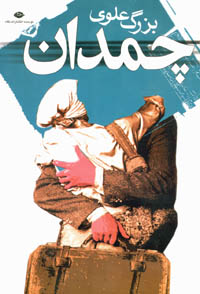
I have started reading Chamedan ("The Suitcase") by Bozorg Alavi (Here's his official website, in Persian) . It is one of Alavi's early collections (first published on 1934).

We decided to read this book at a book club at university. I'll have a post about Chamedan and Alavi later.

The Silmarillion

I finally finished reading The Silmarillion. Not that I am a slow reader (I started on October 11, and the book has 455 in Persian translation), I only had little time to spend on it. In fact, I read most of the book in the time I had between my classes at the university.

The Silmarillion is a complex work and not an easy book to read. The stories contain a lot of themes, names, and various information. The Wikipedia entry on "Of the Rings of Power and the third Age" (the final part of the book) says:

The work is a fictional historical essay dealing with the preamble to the events described in Tolkien's epic novel The Lord of the Rings, and the events themselves, in the style of The Silmarillion. The fact that those events are explored in a mere handful of pages suggests that if the events described in the rest of The Silmarillion had been written in the style of The Lord of the Rings they would have filled hundreds of volumes.

For a complete understanding of the book, it is necessary to read it more than once. That is what I do for most of the books I like. I usually find many interesting points when I re-read the books I had already read. In case of Silmarillion I have a new opportunity. I read the Persian translation and now, thanks to a dear friend, I have the original English text. I can read the stories again, and this time in the original language. The Persian translation was not completely flawless and it's major problem was reading the names. In Persian, normally short vowels are not written. Of course, it is usual to write the short vowels when a new word is introduced, or provide the original foreign word as footnote, but in this case I cannot really blame the publisher because the number of new words was very much and writing all of them with short vowels would probably make the text a little ugly. Anyhow, everything is going to be fine with the original text. I guess I will start it as soon as I get rid of the mid-term exams.

The first part of the book is Ainulindalë ("The music of the Ainur"). It is the story of the creation of the universe ("Eä") in Tolkien's Legendarium and its style is somehow like that of the Old Testament which I really enjoyed --I love archaic style. The story of the creation of the world out of music, especially, is very interesting. I had already tried to compose my own versions of the creation for the fun of writing fiction, and I was fascinated that part of Ainulindalë was similiar to one of my own accounts (in mine, the life was blown into the world from the song of the First Lady --Ovëliad).

The second part, Valaquenta, is less like a story but it's vital to the reading of the rest of the book, as it describes the Valar (those among the Ainur who became the powers of the world), the Maiar (the lesser Ainur who came to help the Valar), and the Enemies (those fallen among the Valar and the Maiar).

The third part of the book, Quenta Silmarillion ("The Account of the Silmarils"), is the bulk of the book and describes the beginning of the world before the elves and the men, the awakening of the elves and later the men and the dwarves, and mainly the story of the Silmarils, the three star-like jewels which were made by Fëanor (one of the high elves, those who went to Valinor upon the invitation of the Valar) along with many stories narrated meanwhile. Probably the most beautiful chapter in this part is the story of Beren and Lúthien. The story was also narrated by Aragorn as a very short poem in Lord of the Rings (FotR, A Knife in the Dark).

The fourth part is named Akallabêth ("The Downfallen"). This is my favorite part, although it is quite short. Akallabêth is the story of the fall of the kingdom of Númenor after the Dúnedain are deceived by Sauron and attempt to attack the Undying Lands and the Valar (and that is why they started calling him Sauron the Deceiver later). Only a group of them, still faithful to the Valar, survive (those lead by Elendil, that Aragorn in Lord of the Rings is his descendant) and Númenor itself is completely destructed by the will of Eru Ilúvatar ("the One, Father of All"). The theme partly resembles the story of destruction of Atlantis. Interestingly, the Quenya form of Akallabêth is Atalantë.

The final part of the book, Of the Rings of Power and the Third Age, tells the story of the making of the rings of power (and the most noticeable among them, The One Ring) and the events that lead to the events of Lord of the Rings, as well as a short narration of Lord of the Rings itself, in Silmarillion style. The book ends with the Eldar's leaving of the Middle-earth and the beginning of a new age for men.

Final words: I strongly recommend reading The Silmarillion for anyone who likes fantasy. Especially, if you have already read Lord of the Rings, reading The Silmarillion would increase the joy of the reading of both of the books.